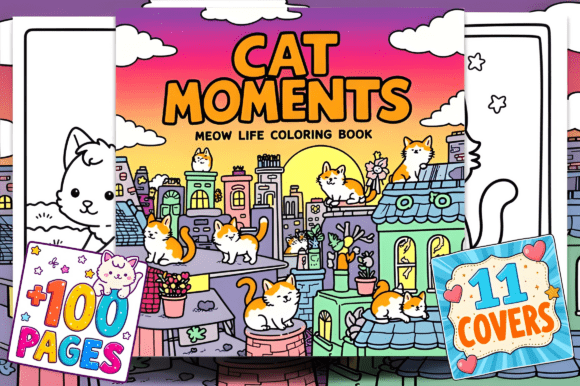
Cat Moment Meow Life: A Designer’s Review
When I first opened the Cat Moment Meow Life Coloring Book Pages, I didn’t just see files; I saw potential projects. As an embroidery designer, my brain immediately starts translating flat graphics into textured, stitched reality. This collection isn't a simple set of drawings—it’s a library of moods, each waiting to be brought to life with thread.
The Immediate Mood: Whimsy and Charm
The first impression is pure, playful charm. The cats are drawn with a friendly, whimsical personality, not overly cartoony but definitely heartwarming. The layouts are clean and the detail level is thoughtful—there’s enough character to make an embroidered piece interesting, but not so much microscopic detail that it would become a nightmare to stitch on a curved cap or a textured fabric. This visual personality feels perfect for projects that aim to evoke a smile, a sense of cozy comfort, or a personal touch.
Where These Designs Naturally Belong
I immediately pictured a custom embroidered tote bag. Imagine one of these cat moments, stitched in a soft gray or a playful bright color on a natural canvas bag. The scale feels right—the 8.5x8.5-inch base means these designs can be adapted to a central, statement piece on a bag or apron. But they also shrink down beautifully. I’m thinking of a smaller version on the corner of a linen tea towel, or a single, sweet cat peeking out from a baby blanket or a nursery pillow cover. For small business owners and Etsy sellers, this versatility is gold. You can create a whole line of cohesive merchandise: sweatshirts, pillow covers, kitchen towels, and even embroidered patches, all featuring these charming feline moments.
Performance in Real Embroidery Situations
Let’s walk through a real scenario. Say a client wants a personalized gift—an embroidered sweatshirt for a cat-loving friend. You select a design from Cat Moment Meow Life. The black and white base is a strength here. It gives you complete freedom over thread color choice. You can go classic with black satin stitch outlines and fill stitches in heather gray, or get vibrant with teal and coral. The SVG and PNG formats provided are crucial for us; they allow clean import into embroidery software for digitizing, letting you set stitch types, densities, and the sequence.
On a sweatshirt, a design with moderate detail will need good stabilizer due to the fabric’s stretch. The simpler outlines in many of these pages are a benefit here—they won’t require overly dense stitching that could stiffen the fabric. On a structured item like a tote bag or an apron, you have more freedom to use a fuller fill stitch to really make the cat pop. For a baby item, like a onesie, you’d likely choose a smaller, simpler motif and maybe opt for a softer running stitch outline for safety and comfort.
A Note on Commercial Use and Presentation
For craft businesses, using these graphics as embroidery designs affects more than just the stitch. They impact your product’s perceived value. A well-executed embroidery from a charming, clear design like this enhances customer trust. It looks intentional, professional, and lovingly handmade. It boosts giftability. A holiday gift like an embroidered pillow cover featuring a cozy cat scene feels personal and high-quality. Also, using a cohesive set of designs across your Etsy listings or craft fair products strengthens your brand consistency. Customers recognize your style.
Where to Exercise Caution
While the designs are adaptable, their application needs smart judgment. On very small hoop sizes, some of the more detailed pages might lose clarity—tiny whiskers or intricate patterned areas could blur into a dense knot if not digitized carefully. Always test on scrap fabric first. Similarly, on dark fabric backgrounds, you need to plan your thread color contrast meticulously; the black and white source art is a guide, not a prescription.
Textured fabrics like thick sweaters or curved surfaces like caps require simplifying the design’s smallest elements. Avoid translating every single tiny line from the coloring book page directly into a stitch. Focus on the core shapes. For products that need frequent washing, like kitchen towels or everyday apparel, consider a robust fill stitch pattern and quality thread to ensure longevity.
Practical Designer Notes Before You Hoop
My routine for a collection like Cat Moment Meow Life Coloring Book Pages always includes these steps:
- Test a representative design on scrap fabric of the type I plan to use (e.g., cotton for towels, fleece for sweatshirts).
- Check thread color contrast against both light and dark backgrounds—create simple black and white mockups to visualize.
- Review and adjust stitch density in my software; a coloring page outline might tempt you to make it very dense, but that can puckering.
- Confirm the physical hoop size needed for my desired final size on the product.
- Inspect the small details of the chosen page: are there corners or spots that are too fine for my machine or fabric?
- Use proper stabilizer for the project; this is non-negotiable for clarity.
- Most critically, I confirm the licensing terms for this graphics product before selling any finished embroidered items or commercial embroidery projects. The product description lists the file formats, but I always verify the usage rights directly.
The Final Stitch: Value Beyond the File
Ultimately, Cat Moment Meow Life Coloring Book Pages offers more than 100 graphics. It offers a theme, an aesthetic, and a jumping-off point for countless embroidered products. From a boutique’s line of embroidered aprons to a personalized wedding gift pillow cover, the charm translates. The key is to treat these pages as inspiration and blueprints, not direct maps. Your digitizing skills and material choices will turn these black and white drawings into tactile, thread-based art that customers will love to touch, wear, and give.
For embroidery designers, small shop owners, and makers, this collection is a practical asset. It saves you drawing time and provides a consistent visual library. Just remember to do your technical homework—test, adjust, and verify. Then, let those cat moments come to life, one stitch at a time.